Alumni Spotlight: Dr. Xiran Chen & Teaching Across Cultural Contexts
In this segment, we highlight CIRTL alumni working in a variety of professions.

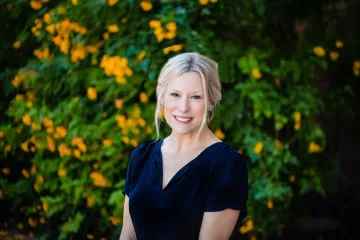
This month, we feature Dr. Xiran Chen (2024-2025 postdoc fellow) who is a first-year Assistant Professor at The Chinese University of Hong Kong, Shenzhen, China. In this interview, hear what he has to say about his transition to teaching in China has been like, what has surprised him (and what hasn’t) about teaching in a different cultural context, and how CIRTL impacted his job search.

Name: Dr. Xiran Chen
Year in program: 2024-2025 Postdoc Pathways
Current position: Assistant Professor, The Chinese University of Hong Kong, Shenzhen (CUHK-SZ)
Tell us about your first year as a faculty member. What has been easier than you expected? More challenging?
The transition to a position in China was easier than I expected. This is partly because CUHK-SZ is an English-medium institution that emulates the Western university model. In addition, most faculty members in my division earned their degrees in North America. Working here feels very much like working at a U.S.-based institution, such as the UofA.
What has been more challenging is balancing different responsibilities. Being a faculty member requires much more multitasking than being a postdoc. It demands close engagement every day across teaching, research, and service. I have gradually learned how to balance these responsibilities, but I am still working on maintaining a healthy work–life balance.
Did your CIRTL training impact your job search? If so, how?
Definitely. Because I genuinely enjoy teaching and interacting with undergraduate students, my dream job was a faculty position at a teaching-focused university, typically with a 3–3 teaching load. My CIRTL training helped me prepare intentionally for that goal.
I took CIRTL workshops on writing teaching statements and preparing for interviews that were really helpful. The program also allowed me to co-teach a course with an experienced colleague, which became my first in-person teaching experience as an instructor. That experience was invaluable and strengthened my CV significantly.
Most importantly, my CIRTL colleagues — especially Kristin and Lisa — provided tremendous support when I was preparing for a teaching demo during a fly-out interview. All of these supports had a very positive impact on my job search.
How has your CIRTL training shaped your approach to teaching in China? What has surprised you most about the transition?
In my first year, I mainly teach graduate courses, including MA courses and PhD seminars.
Course and learning activity design has been easier than I expected. Thanks to the CIRTL program, I had already walked through the full process of teaching a course from planning to post-course reflection. I find the idea of backward design especially useful. I always begin with the learning objectives for each session and then design activities that align with those goals. Even though I had to prepare courses from scratch, I was able to maintain a steady pace and develop realistic expectations about how my lesson plans would work in practice.
One of the main challenges has been adapting to different classroom participation norms. Compared to my experience in the U.S., students here tend to listen more than speak and are often more cautious when sharing their thoughts. I have to be very intentional about building rapport and creating an encouraging learning environment. For example, I consciously adopt an encouraging tone when interacting with students and incorporate more local examples that resonate with their experiences. Adopting an encouraging tone in my current context often means actively lowering the "stakes" for participation. In China, students are often cautious about sharing thoughts unless they are certain the answer is "correct." In my first class, a student even stood up spontaneously when I invited them to speak! I immediately reassured them that there was no need to stand and encouraged everyone to "jump in" whenever they saw fit.
Instead of a definite response of "yes/no," I use prompt questions to guide their thoughts. For example, during a discussion on how international organizations (IOs) shape politics, a student argued that IOs are self-interested. This was a trenchant insight, but incomplete for our discussion. I responded with: "I see the logic you’re building there - you’ve identified the interests of the bureaucrats within these organizations. Building on those interests, what would you expect them to do when major powers try to use the organization for their own goals?" This validates their contribution while scaffolding them toward a more complex answer. I also use my interactions with more active students to model this supportive atmosphere, which helps reassure the more cautious students that the classroom is a safe space for "unfinished" ideas.
Regarding local examples, I find that using Chinese literature helps bridge the gap between abstract theories and the students' lived experiences. For instance, I use the "Dark Forest" theory from Liu Cixin’s The Three-Body Problem (三体; a popular sci-fi novel with a series on Netflix!) to teach Realism vs. Liberalism. I also draw on Shiji (史记; a classic work of historiography) and Water Margin (水浒传; a classic novel about a band of outlaws) when discussing state and non-state actors in civil wars. These examples make Western-centric theories feel immediately relatable.
What is one of your favorite teaching tips or practices right now?
My favorite teaching practice is think–pair–share. Although the majority of my students are MA students, many of them do not have systematic training in political science or international relations. I have found that many teaching strategies commonly used in undergraduate classrooms are also very effective in MA courses.
By designing think–pair–share activities, I have found that students who come from different disciplinary backgrounds bring important strengths to the classroom. Their diverse academic and personal perspectives often enrich the discussion in unexpected and meaningful ways.
A specific activity that went particularly well was in my lecture on Climate Change and Environmental Politics. The goal was to help students identify the political causes and consequences of climate change, which is not always straightforward.
I asked students to individually identify one way climate change might affect human life. A student with a STEM background shared an interesting but rarely mentioned example with their partner: polar bear "invasions" into human territory. This example turned out to be remarkably timely and "prophetic"; just a couple months after our discussion, the "Bear Crisis" in Japan became a major headline. The crisis led to a record-high 230 people injured/attacked and 13 deaths. While it might be a coincidence that the student’s example anticipated what happened in Japan, it perfectly illustrated the importance of interdisciplinary input. It showed how biological shifts can suddenly become urgent political and human security crises. Giving the students the space to pair up first allowed that student to realize that their unique disciplinary lens was exactly what the class needed to understand the politics of climate change.
Is there anything you want graduate students or postdocs considering joining CIRTL to know?
Teaching is not something we should assume we know how to do by instinct. It is a skill that can and should be developed through deliberate practice and reflection.
CIRTL offers a comprehensive training program that exposes participants to state-of-the-art scholarship on teaching and learning while also providing hands-on teaching experience. Also important, it is a supportive and encouraging community. That combination makes a real difference!